

Solar lighting for public spaces, parks and pedestrian routes
Solar Urban & Area
Solar urban and area lighting takes the off-grid logic of solar street lighting and applies it to the public realm: parks, plazas, promenades, pedestrian paths, waterfronts, and small civic spaces where grid cabling can be disruptive or expensive. The goal is not simply to place a panel above a fixture. The goal is to size the energy system around the lighting task, keep the fixture visually quiet, and make the space feel safe and usable after dusk.
How we approach solar urban & area.
Public-space autonomy
A plaza or park route usually needs lower absolute light levels than a traffic corridor, but it needs the light to land with more care. Bollards, low poles, and discreet solar heads create pools of light at entrances, path intersections, seating areas, and edges where wayfinding matters.
Because every fixture carries its own energy source, the layout can avoid trenching through finished paving, tree roots, heritage stone, or waterfront slabs. This makes solar area lighting especially useful for upgrades to existing public spaces where civil works would dominate the cost and disruption.
Controls and night profiles
Solar area lighting benefits from layered dimming. A path can run at full output through the early evening, settle into a lower baseline late at night, and lift again when occupancy sensors detect movement. This protects the battery while keeping the public realm legible.
The control profile is set around real use. A coastal promenade, a village square, and a park shortcut all have different evening rhythms, so each scheme needs a night profile that matches its people rather than a generic dusk-to-dawn output.
Material and maintenance choices
The public realm is hard on small infrastructure. Solar fixtures need robust housings, vandal-resistant fixings, accessible batteries, and optics that do not create glare for seated users or nearby residents. Coastal Cyprus sites also need careful material selection around salt exposure.
Maintenance planning starts before installation. Battery access, charge-controller replacement, and panel cleaning have to be possible without dismantling the paving or bringing heavy access equipment into a pedestrian space.
Standards and applications
EN 13201 P-classes guide pedestrian and cyclist routes, while CIE 150 informs obtrusive-light control. IEC 61215 and IEC 61730 remain relevant for PV module quality and safety. The result is a public-space lighting system that is independent from the grid without becoming independent from good lighting practice.
What every brief asks us.
- Solar bollards, low poles, and area luminaires selected by use pattern
- Battery autonomy sized around late-night dimming profiles
- Occupancy boost for low-traffic routes
- Low-disruption installation on existing paving and planted areas
- Glare control for seating zones and nearby residences
- Serviceable batteries, drivers, and panels
Related case studies.
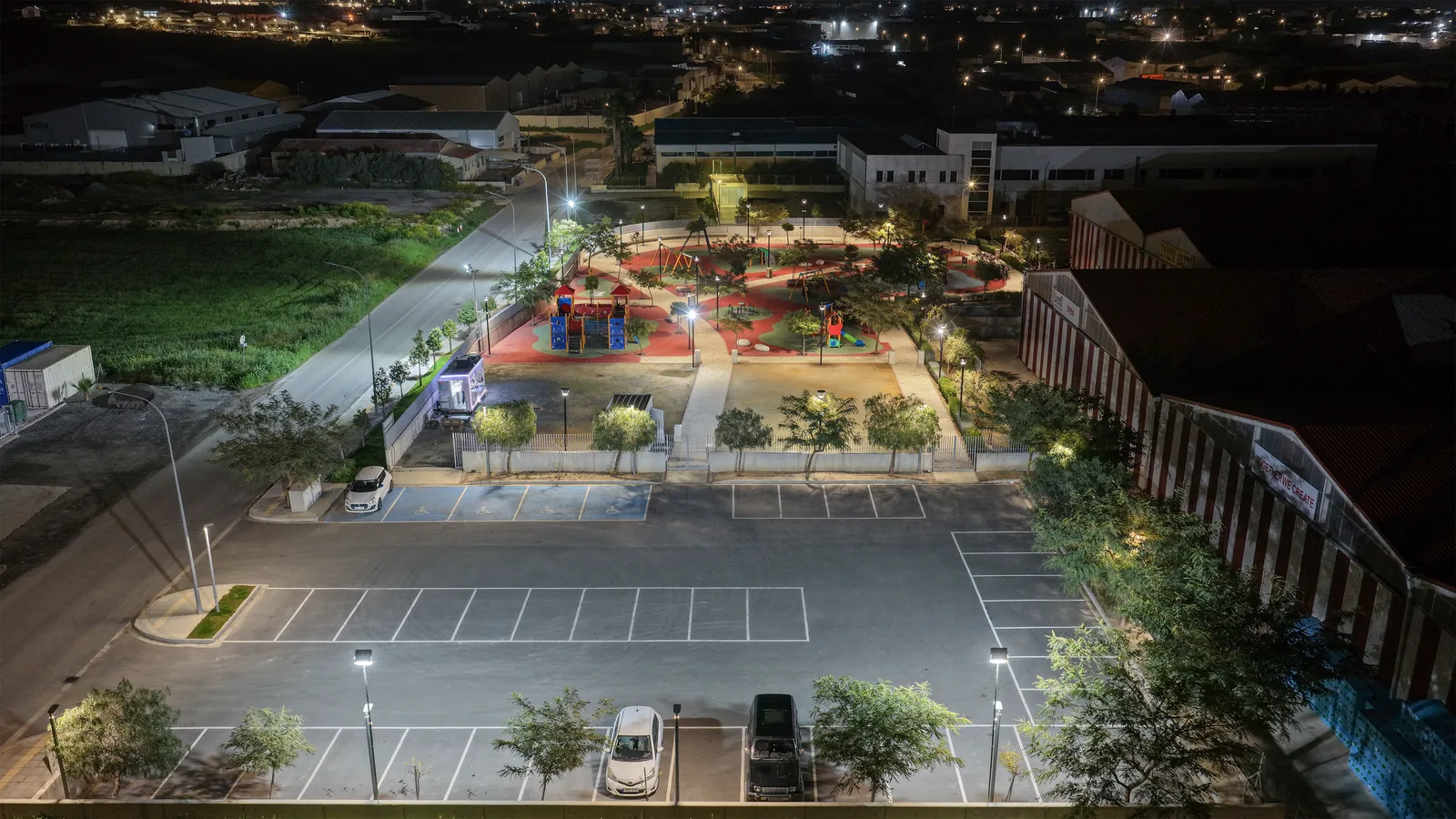
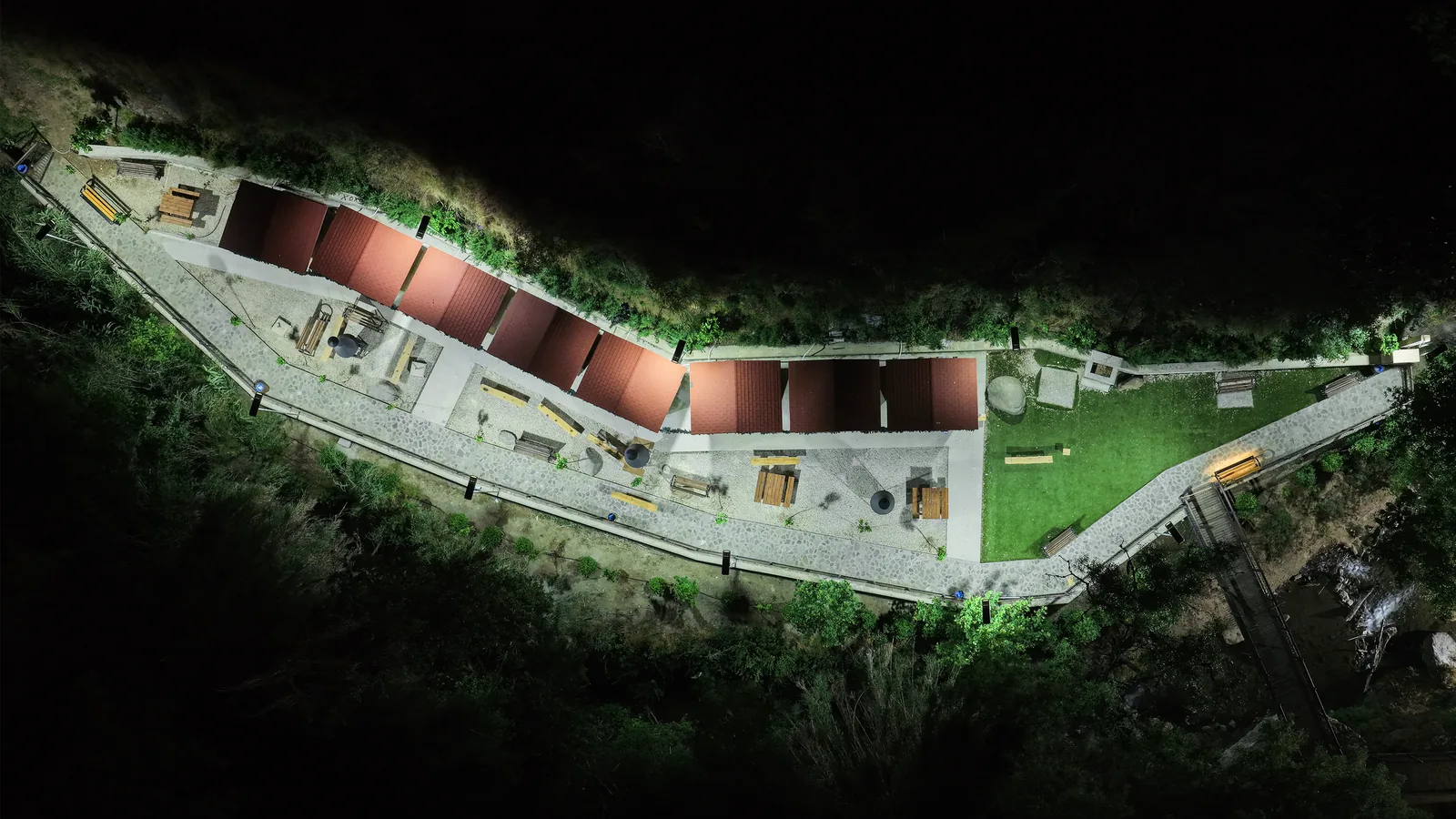
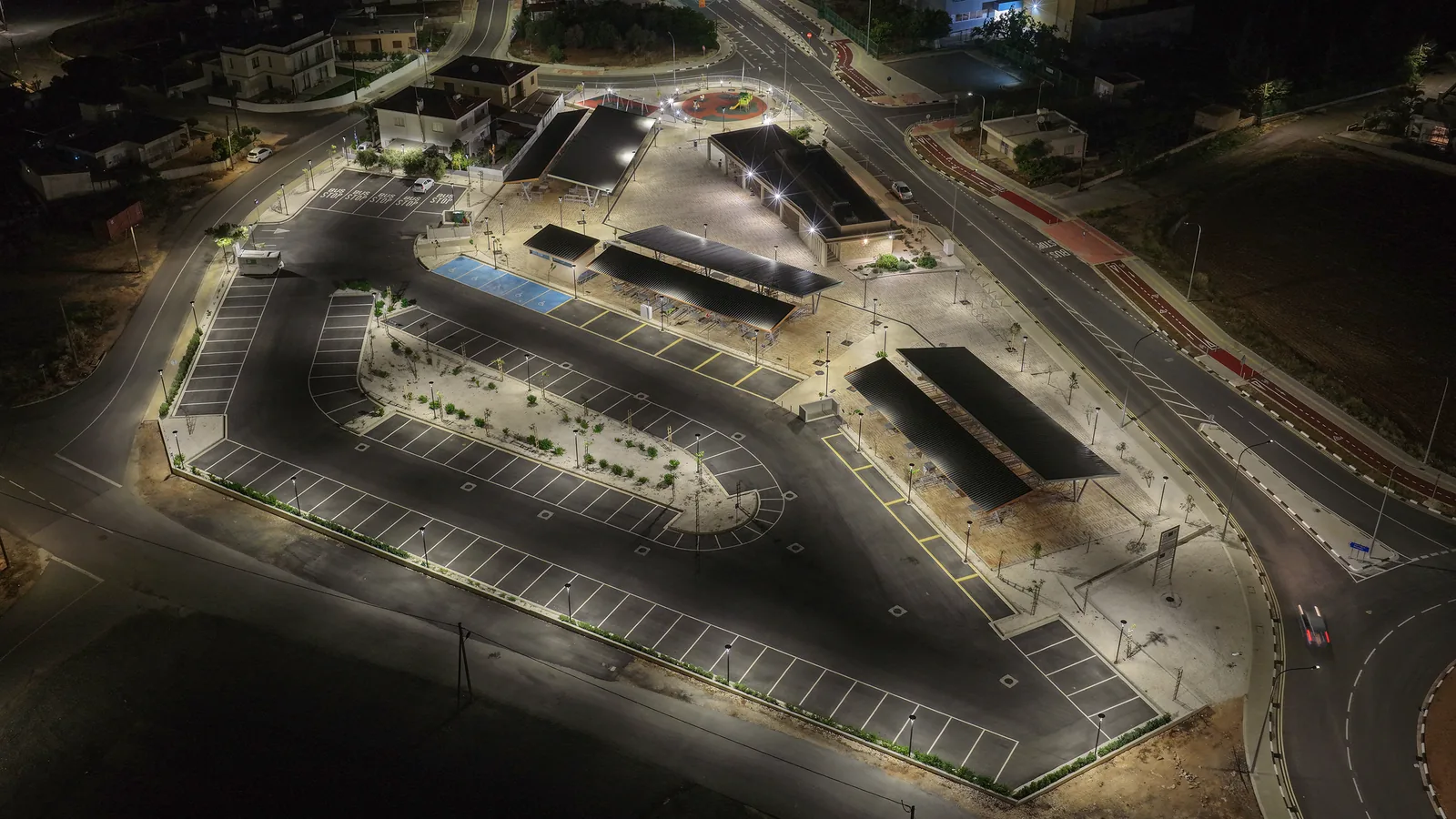
Common questions.
- Where does solar area lighting make the most sense?
- It is strongest on existing parks, plazas, promenades, and pedestrian routes where trenching would be expensive, disruptive, or visually damaging. It also works well for small municipal upgrades where the electrical supply is far from the area being lit.
- Are solar bollards enough for a public route?
- Sometimes, but not always. Bollards are good for edge definition and low-level comfort; wider paths, intersections, and seating areas usually need low poles or area heads to provide better vertical illuminance and wayfinding.

