
Roadway lighting, redesigned
Innovative Street Lighting
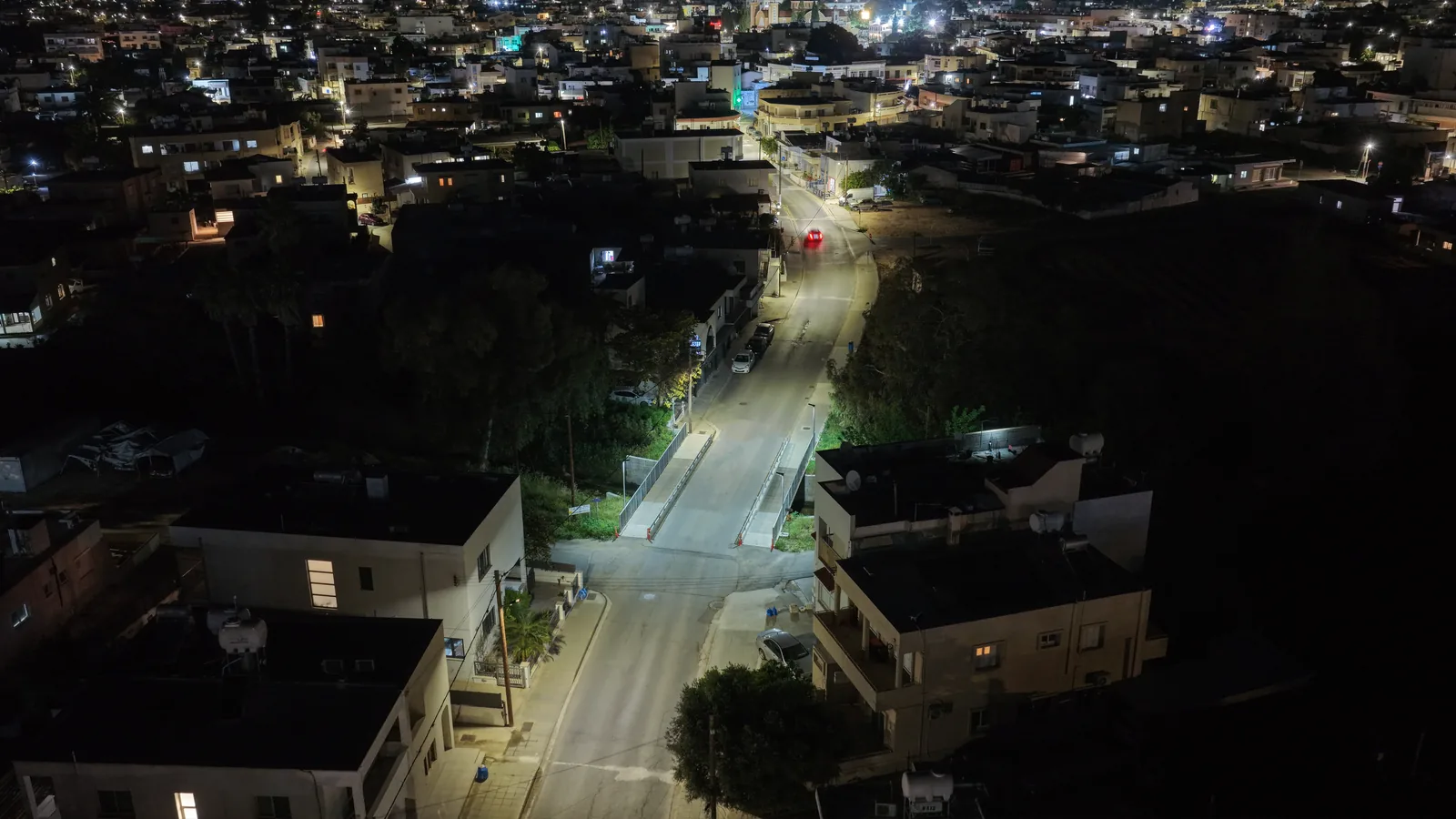
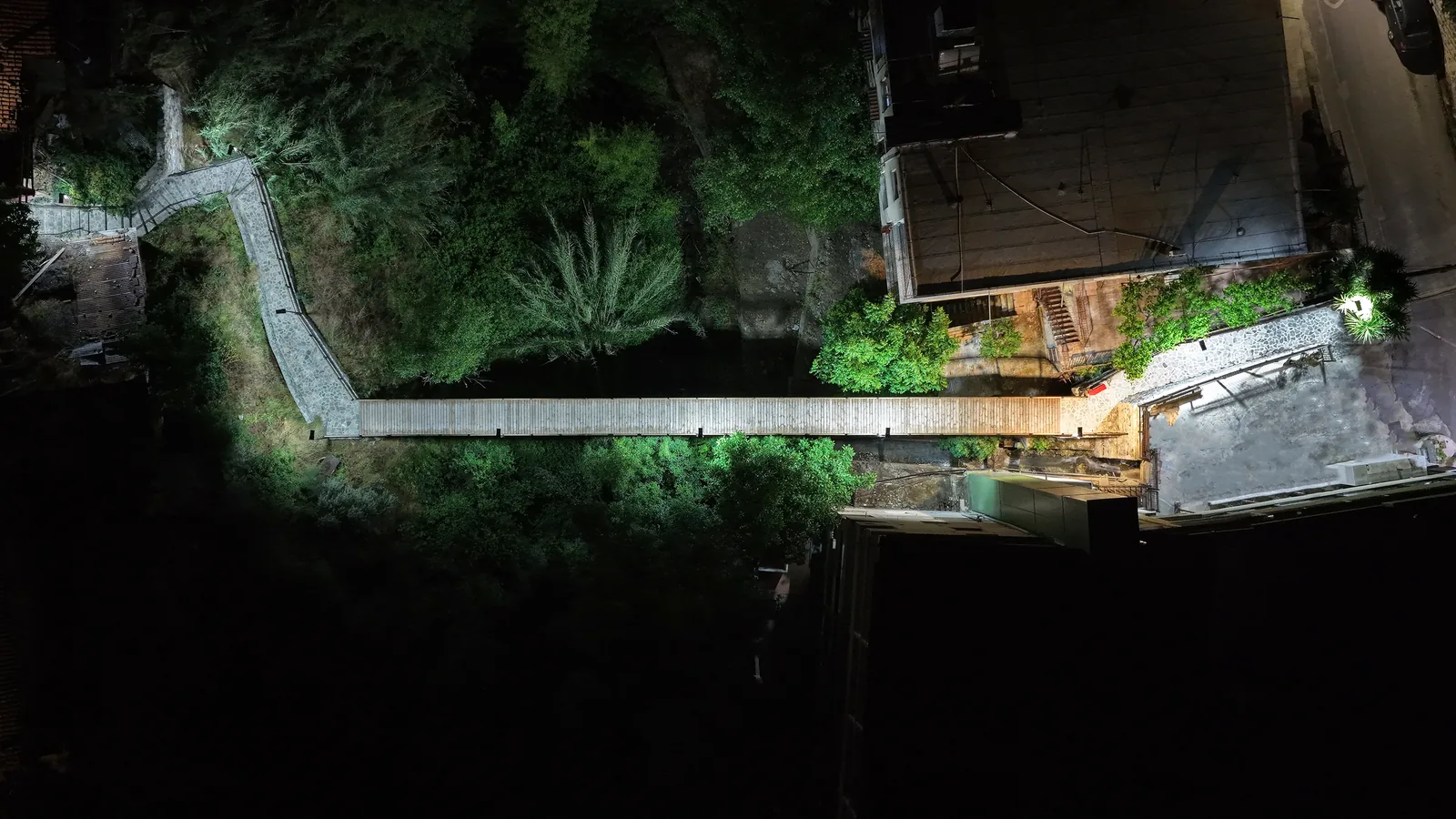
Some corridors are difficult to light with a conventional pole-and-luminaire scheme: bridges where pole foundations are impossible, mountain roads where the parapet is the only structural mounting surface, tunnels and underpasses where ceiling clearance is tight. Innovative street lighting is the umbrella we use for the small family of techniques that solve these constrained-geometry corridors — guardrail-integrated linear LED, low-mounted ground luminaires, parapet-mounted asymmetric optics, and indirect bridge-deck schemes. The aim is the same as a conventional scheme — meet the EN 13201 target with controlled glare and minimal light pollution — but the geometry is different.
How we approach innovative street lighting.
Where conventional poles fail
On a mountain corniche or a long-span bridge, planting a 10-metre column every 30 metres is either structurally impossible or visually destructive to the landscape. The same applies to historic centres where pole infrastructure breaks the rooflines, to coastal cliff roads where wind loading rules out tall masts, and to urban tunnels where overhead clearance is fixed.
Linear LED systems mounted into the guardrail or parapet at handrail height (roughly 1.0–1.2 m above the running surface) deliver an even longitudinal wash with extremely low glare. Because the source is below eye level for both motorists and pedestrians, the threshold-increment metric (TI) that measures disability glare drops to single-digit percentages — significantly better than most pole-mounted schemes.
Optical and structural design
Low-mounted optics need to be asymmetric: light is wanted on the carriageway, not on the parapet behind the fixture. Modern linear LED modules offer 30°/60° asymmetric distributions that throw the beam outward across the lane while keeping the back-light essentially zero. IP-rated extrusion housings and silicone gaskets are standard; for coastal exposure we specify IP66 or higher with marine-grade aluminium and stainless fixings.
Maintenance access is the constraint that quietly drives the system choice. A pole-mounted head is reached by a cherry-picker that occupies a lane; a parapet-mounted module can be serviced from the footway without closing the road, which on a critical arterial is a serious operational benefit.
Energy and the photometric trade-off
Low-mounted schemes generally have lower installed wattage per metre than pole-mounted equivalents, because the light source is closer to the surface being lit and the inverse-square law works in their favour. The trade-off is uniformity at greater pavement widths — beyond about 3.5 m of carriageway, a single-side parapet scheme starts to fall outside the EN 13201 uniformity target and a complementary pole or median-mounted source is needed.
For the bridges and corniche roads we typically work on (single carriageway, 6–7 m wide), a single-side parapet scheme with continuous LED extrusion meets the photometric brief at 8–12 W per linear metre, which compares favourably with a 60–80 W pole head every 30 metres.
Standards and applicable contexts
The same EN 13201 photometric framework applies. CIE 88 covers tunnel lighting specifically; CIE 115 applies to motorised traffic. Most Cyprus municipal bridge and tunnel works reference both. Where the corridor has scenic or heritage value, the absence of vertical poles is itself the design intent — innovative street lighting is the class that lets lighting disappear into the civil infrastructure.
What every brief asks us.
- Asymmetric low-mounted optics to control glare and back-light
- IP66 marine-grade housings on coastal and exposed installations
- Maintenance access without lane closure
- Continuous longitudinal uniformity across constrained geometries
- Compatibility with EN 13201 for the underlying lighting class
- Discreet integration with parapets, guardrails, and tunnel ceilings